

At peak vaccination season, pharmacy associates were spending a huge chunk of their day handling inbound calls for vaccine scheduling.
They were doing what they could, but it came at a cost:
The process “worked” but only because humans were filling the gaps.
This wasn’t just an efficiency exercise. The stakes were real:
Without intervention, call handling relied entirely on memory and follow-up, a fragile, high-stakes system.
We stopped treating IVR like a phone tree and started treating it like a capacity strategy.Instead of routing callers to stores faster, we asked: What if the system could actually finish the job?
So we:
The goal wasn’t perfection. It was containment without frustration.
I owned the end-to-end strategy for redesigning the vaccine scheduling IVR:
In three months, the pilot handled 22,734 calls.
Before redesigning anything, we needed to see reality, not assumptions.
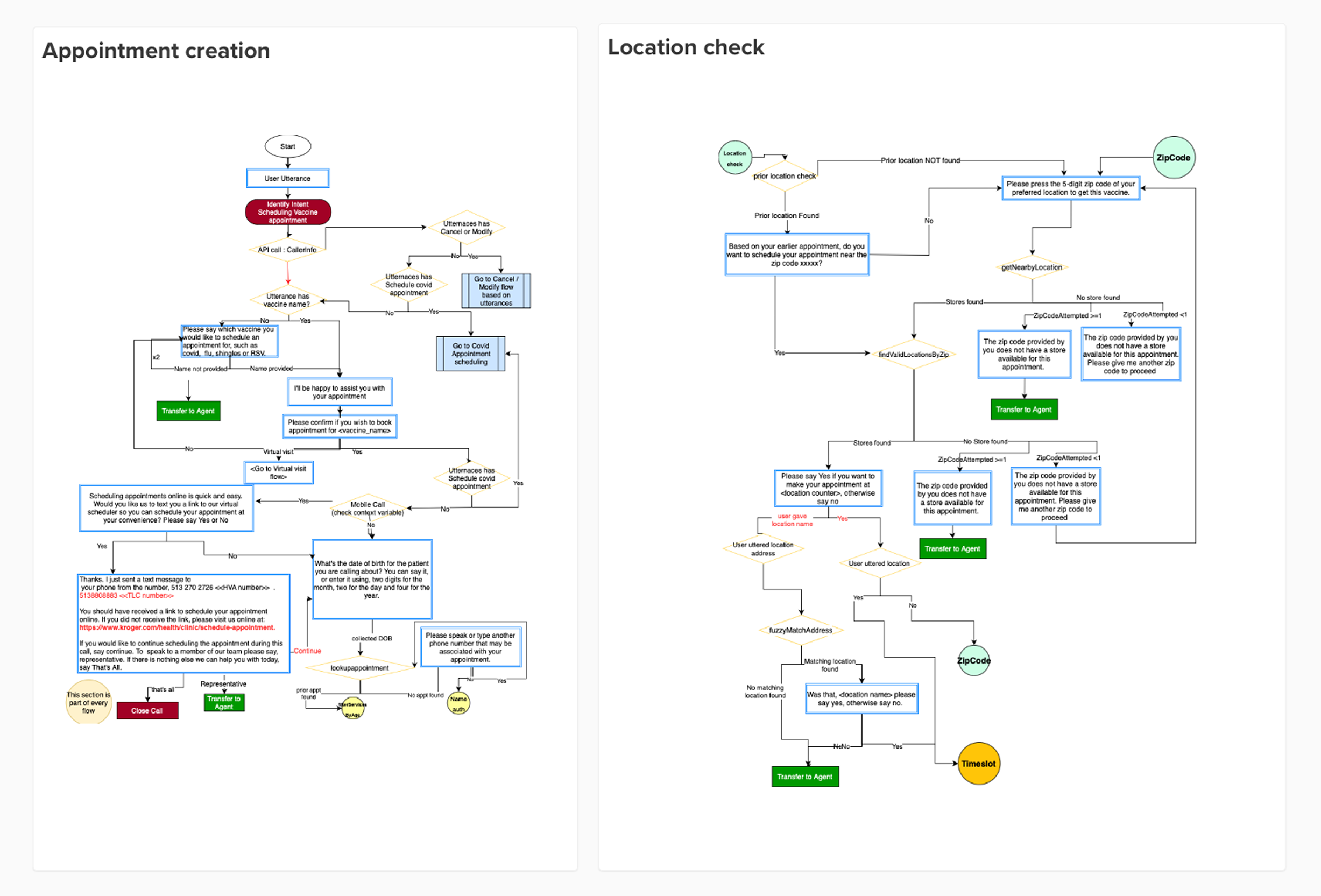
What we learned:
Telecom systems and Watson had different tones and response styles.
Instead of email chains, we created structured workflow.

Previous IVR flows ended abruptly callers hung up, often needing another call.

We noticed a major friction point when the IVR couldn’t recognize DOB inputs.

Telecom systems and Watson had different tones and response styles.
Instead of email chains, we created structured workflow.
Previous IVR flows ended abruptly callers hung up, often needing another call.
We noticed a major friction point when the IVR couldn’t recognize DOB inputs.
This project reinforced the principle: automation is an ally, not a replacement.